
Articles on business management, ERP and artificial intelligence
The USER Informática (UserIT) blog publishes articles on ERP and business software, specific industries such as ceramics, applied artificial intelligence and regulation such as VeriFactu or mandatory e-invoicing, written by the team that develops W3ERP in Valencia.
Latest articles
These are the published articles, from the most recent to the oldest. All of them open with a summary that answers the question in the title, and each section starts with a short answer before the detail. If you are short of time, the summaries and the first paragraph of each section are enough.
Company ·
UserIT and Laecel join forces: consulting and software for SMEs
USER Informática (UserIT), a business software company founded in Valencia in 1990, and Laecel, a consultancy for SMEs based in the Valencia area, have formed a strategic alliance. Laecel detects, decides and executes with four areas; UserIT provides the W3ERP ERP and the W4 AI agents. Each keeps its own business.

Artificial intelligence ·
What AI can do today in the management of an SME
In an SME, artificial intelligence is already useful for answering support queries, finding internal information, reading documents and summarising ERP data. It works when it uses the company's own knowledge, is implemented in phases and the team reviews its answers at first.

ERP and business software ·
How to get the choice of your company's ERP right
To choose an ERP, start from the company's real processes, check how much the standard program covers and how much will need customising, review integrations, support and total cost over five years, and test it with your own data before signing.

Regulation ·
B2B e-invoicing: what Royal Decree 238/2026 requires
Electronic invoicing between companies and professionals will be mandatory in Spain under the Crea y Crece Law and Royal Decree 238/2026. Following Order HAC/1028/2026, it applies from 6 October 2027 to businesses invoicing more than 8 million euros and from 6 October 2028 to the rest.

Regulation ·
VeriFactu in 2027: what changes in your invoicing program
VeriFactu is the Spanish Tax Agency system that requires invoicing software to record each invoice in an unalterable way and, if chosen, send it to the Tax Agency. It is mandatory from 1 January 2027 for companies and from 1 July 2027 for everyone else.
Industries ·
ERP for ceramics companies: what it is and which functions it needs
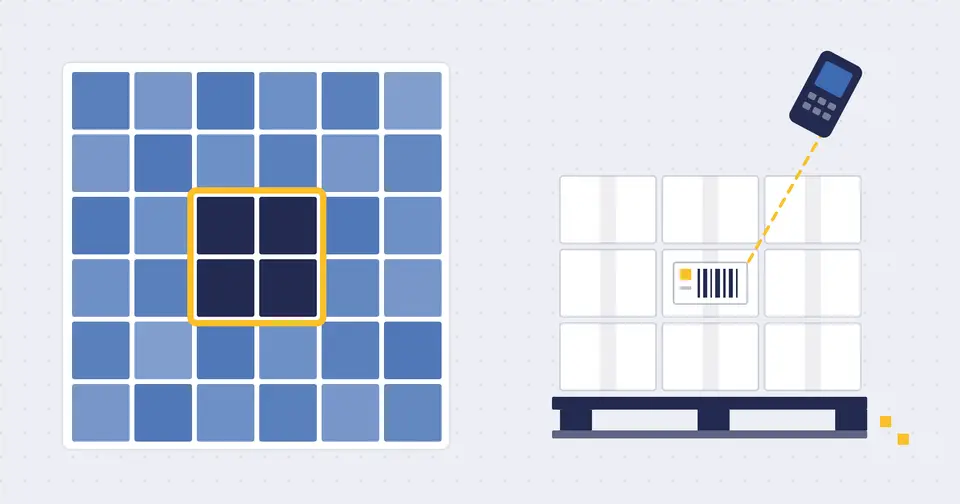
An ERP for ceramics companies is business software that integrates sales, purchasing, production, warehouse and accounting in a single database, with tile-specific functions: shade and calibre control, batch and pallet management, real cost per batch, EDI with distributors and an RF warehouse.


What we write about
We file articles by topic: industries, with what is specific to ceramics, furniture, culture, public bodies and industry; ERP, on business software in general; development; artificial intelligence; regulation, with legal changes in invoicing and accounting; grants, with public calls; and company, with news from USER Informática.
- Industries
- ERP and business software
- Software development
- Artificial intelligence
- Regulation
- Grants
- Company
Quick answers
Below is a selection of our frequently asked questions about W3ERP, ERP in general and the industries we work in. They are short answers that take a minute to read, and we review them when the product or the regulations change. The full list is on the frequently asked questions page.
How long has USER Informática been in business?
Since 1990. USER Informática was founded that year in Valencia, Spain, and has been developing business software ever since. It started on Nixdorf Computer and Siemens Nixdorf equipment, moved to Fujitsu Siemens Computers in 1995, to Siemens and Hewlett-Packard in 2005 and to Occentus Networks in 2015, and today runs on Amazon Web Services. Its software has gone from character mode and MS-DOS to fully web applications.
What is the difference between the shade and the calibre of a tile?
The shade is the colour variation between different firings of the same tile model, and the calibre is the difference between the real size of the piece and its nominal size. Both are shown by a code printed on each box and must not be mixed in the same room. That is why the warehouse manages them as batch keys and the ERP must reserve and ship by shade and calibre.
Which industries does UserIT work with?
Any industry. Today it has clients in five: ceramics and materials; furniture, upholstery and bedding; culture, leisure and events; public sector; and industry, energy and other fields. Each one has its own page, with its challenges and the W3ERP modules it uses most. If your industry is not on the list, W3ERP is adapted to it in the custom development layer.
Does W3ERP have to be installed on company computers?
No. W3ERP has been 100% web since 2005: it is used from the browser and there is no program to install on the company computers. Access works the same from the office, the factory or a mobile device. The platform is hosted on Amazon Web Services and maintained by the UserIT team.
What is an ERP and what is it for in a company?
An ERP (Enterprise Resource Planning) system is business management software that brings the sales, purchasing, production, warehouse and accounting of a company together in a single database. It makes every department work with the same data: stock, orders and invoices match what is in the warehouse and what has been delivered to each customer.